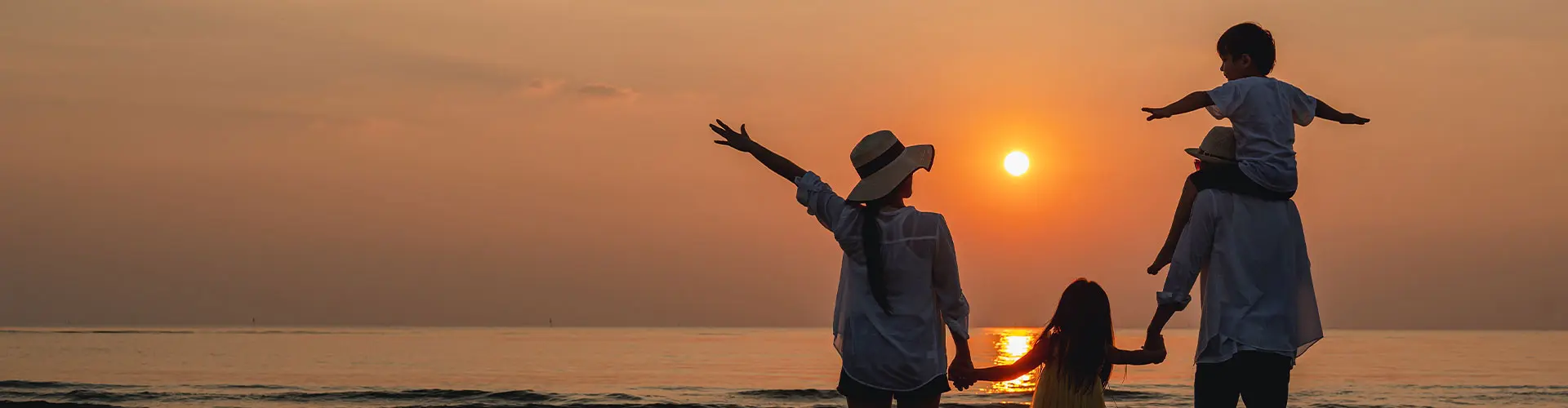
Everyone knows the classic sunset photos from the Outer Banks - dock silhouettes, glowing marsh grass, orange skies over the sound. But if you really want to understand why certain OBX sunsets look better than others, you have to look at geography, orientation, and atmospheric science.
The Outer Banks is a narrow chain of barrier islands running roughly north–south. The Atlantic Ocean sits to the east. The Albemarle and Pamlico Sounds stretch to the west. That simple orientation is the foundation of every great OBX sunset. The sun sets in the western sky. On the OBX, that means sunsets happen over shallow, reflective water, not open ocean. And scientifically, that matters.
According to the National Oceanic and Atmospheric Administration (NOAA), sunsets appear more vivid when sunlight travels through a thicker layer of atmosphere at lower angles, scattering shorter blue wavelengths and leaving reds and oranges more visible (NOAA Atmospheric Optics explanation of Rayleigh scattering). Flat horizons and moisture in the air enhance this effect. Shallow sound waters, marshes, and low tree lines create ideal conditions for long, unobstructed western views, and strong light reflection.
Here are some lesser-known sunset locations where science and geography align perfectly.
Sandy Run Park (Kitty Hawk Woods Coastal Reserve)
Most visitors head for Duck Boardwalk or Jockey’s Ridge for sunset. But tucked inside Kitty Hawk Woods is Sandy Run Park, a freshwater pond surrounded by maritime forest. Why it works:
- The pond provides calm, glassy water for reflection.
- Surrounded forest blocks crosswinds, allowing smoother water surfaces.
- The western orientation is nearly unobstructed over low vegetation.
- Freshwater ponds often produce early evening humidity layers, intensifying light diffusion.
Because the water is sheltered, it reflects color more cleanly than choppier open sound areas. It’s quiet as there are no boardwalk crowds. Just light and still water.
The End of Airport Road (Frisco Soundside)
On Hatteras Island, drive toward the Frisco Woods Campground area and continue west along Airport Road toward Pamlico Sound. Few tourists linger here at sunset. Why it works:
- Pamlico Sound is extremely shallow, averaging around 5–6 feet deep.
- Shallow water warms quickly, increasing late-day evaporation.
- Higher moisture in the air enhances scattering of warm wavelengths.
- Minimal elevation on the western horizon gives a true 180° sky spread.
The result is wide, painterly skies that often outperform more popular spots.
Manns Harbor Boat Ramp (Croatan Sound)
Most visitors never cross the bridge to watch the sunset here, but they should. This location faces west across Croatan Sound toward Roanoke Island. Why it works:
- Croatan Sound is broader and deeper than many smaller sound inlets, offering a large reflective plane.
- The western horizon is clean with low tree line and minimal structures.
- Open wind fetch creates subtle ripples that amplify color gradients rather than distort them.
Large water surfaces reflect more light when the sun angle drops below 6 degrees above the horizon, a key point during the “golden hour”. This is one of the widest western sky views in Dare County.
Canadian Hole (Day-Use Area 27), Cape Hatteras National Seashore
Locally called “Canadian Hole,” this windsurfing hotspot sits along Pamlico Sound between Avon and Buxton. It’s famous for watersports, but underrated for sunset. Why it works:
- Completely open sound exposure with no tall vegetation.
- Barrier island width here is narrow, which means fewer atmospheric obstructions.
- Windsurfers often leave by sunset, leaving calm water for reflection.
- The sound’s orientation creates a long, uninterrupted western light corridor.
The combination of flat horizon and shallow water produces extended twilight glow, often lasting 20–30 minutes after sunset.
Pine Island Audubon Sanctuary (North Corolla)
This protected maritime forest area has elevated wooden platforms overlooking Currituck Sound. Few casual tourists venture here at dusk. Why it works:
- Elevated boardwalk platforms create slightly higher viewing angles, improving horizon line visibility.
- Currituck Sound is particularly shallow and sediment-rich, increasing light diffusion.
- Wetland vegetation traps humidity near the surface, boosting color intensity.
According to atmospheric optics research, increased particulate matter (including salt aerosols common in coastal marshes) enhances warm color scattering at sunset. This spot quietly produces some of the most saturated skies in northern OBX.
Why Soundside Always Wins
The scientific reality is that ocean sunsets in OBX don’t exist. The Atlantic is east-facing. Sunrises happen over the ocean. Sunsets require a western horizon, and the sound side delivers it. Barrier island geography creates:
- Flat western horizons.
- Shallow reflective water.
- Low skyline interference.
- High humidity.
- Salt aerosol presence.
Each of these enhances long-wavelength light scattering and reflection, the ingredients for vibrant sunsets. This simply means shallow water with humid air and a low horizon produces a dramatic color.
However, timing also matters. For best results, it is important to arrive 20 minutes before the official sunset and stay at least 15–25 minutes after the sun drops. Light often intensifies during civil twilight (when the sun is 0–6° below horizon). Many people leave too early. The real show often starts after the sun disappears.
The best OBX sunset spots aren’t always the busiest ones. They’re the ones where geography, shallow water, atmospheric moisture, and a clean western horizon combine just right. And on a narrow barrier island built between ocean and sound, that magic happens more often than people realize.