If you’re used to city life, the first thing you notice when you arrive at the Outer Banks is how much you can actually see.
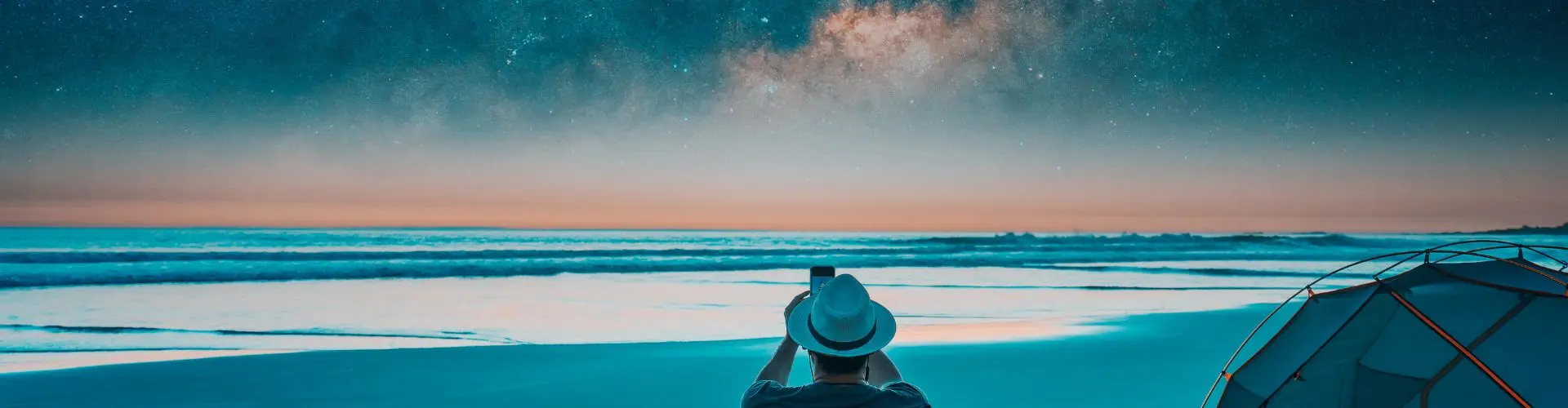
The Outer Banks is one of the few coastal destinations on the East Coast where darkness still exists in a meaningful way. Large stretches remain lightly developed, especially further south and north of the busier towns. Less artificial light means clearer skies, and on the right night, an incredible view of stars, planets, and even the Milky Way.
But not every place in OBX offers the same experience. Some locations are better because they’re darker. Others because they feel more isolated. And a few simply create the right atmosphere for slowing down long enough to look up.
Cape Hatteras National Seashore: Where the Sky Feels Endless
If there’s one place that consistently stands out for stargazing, it’s Cape Hatteras National Seashore. Stretching more than 70 miles across the southern Outer Banks, the seashore has very little development in many sections. That lack of light pollution makes an enormous difference once night falls. The National Park Service has even hosted astronomy and night-sky programs here because of the unusually dark conditions. What makes Cape Hatteras special is scale. You stand on the beach with almost nothing around you except ocean, dunes, and sky. No buildings blocking the horizon. No heavy traffic. Just open darkness.
On clear nights, the stars feel sharper here. The Milky Way becomes visible during certain times of the year, especially in late spring and summer when humidity is lower and moonlight is limited. And unlike mountain stargazing, there’s something surreal about hearing waves while looking at the stars.
Ocracoke: The Quietest Night in OBX
Further south, Ocracoke Island offers a different kind of darkness. Because the island is accessible only by ferry, it naturally avoids the density and brightness found in more populated areas. Once evening settles in, large parts of Ocracoke become remarkably quiet. The beaches here are ideal for stargazing as they feel undisturbed. You can sit for long stretches without hearing much beyond the water and wind.
Locals often describe the island at night as feeling “removed” from the mainland, and that separation becomes especially noticeable under a clear sky. The best part is how unstructured the experience feels. There are no major viewing platforms or organized setups. You simply find a dark stretch of beach and stay awhile.
Pea Island: An Underrated Stargazing Spot
Most people pass through Pea Island National Wildlife Refuge during the day for birdwatching or scenic drives. Very few think about it after dark. But that’s exactly why it works. The refuge sits between stretches of undeveloped coastline and protected habitat, creating low-light conditions that are surprisingly good for night-sky viewing. According to the U.S. Fish & Wildlife Service, the refuge spans more than 5,800 acres of protected land and additional water habitat. At night, that protected emptiness becomes an advantage.
There’s very little visual distraction here. No boardwalk activity, no beachfront hotels glowing in the distance. Just long, open space and uninterrupted sky. If you’re someone who enjoys quieter, less obvious locations, Pea Island may end up being your favorite.
Corolla’s Northern Beaches
The further north you go in Corolla, especially toward the 4WD beaches near Carova, the darker it gets. Development thins out noticeably. Streetlights become scarce. Houses spread farther apart. And suddenly, the stars start multiplying. What makes this area unique is the combination of remoteness and accessibility. You don’t necessarily have to travel far into the wilderness, you just have to move beyond the busiest sections. On especially clear nights, the sky reflects faintly on the shoreline, creating a strange feeling that the ocean and stars are blending together. It’s one of the few places where you can genuinely lose track of time without realizing it.
Jockey’s Ridge After Sunset
Jockey’s Ridge State Park is best known for sunsets and massive sand dunes, but it’s surprisingly good for early-night stargazing too. The elevated dunes create open sightlines in every direction, and once the evening crowds thin out, the atmosphere changes completely. You won’t get the same darkness as Cape Hatteras or Ocracoke because of nearby development, but what you do get is perspective.
Standing on the dunes at night feels different from being on the beach. The wind moves differently. The horizon feels wider. Even the sky seems larger somehow. It’s especially good for people who want an accessible stargazing experience without driving too far into remote areas.
A Few Things That Actually Matter
Good stargazing in OBX depends less on equipment and more on conditions. The best nights are usually clear and dry, around a new moon or low moonlight and away from peak summer haze. Wind can also affect visibility near the coast. Some nights look promising but become hazy quickly because of moisture in the air.
And importantly, give your eyes time to adjust. Most people look up for thirty seconds and assume that’s all there is to see. Stay for fifteen or twenty minutes without checking your phone, and the sky changes dramatically and you start noticing layers.
Stargazing in the Outer Banks feels different because of the environment too. The sound of waves. The absence of buildings. The feeling of being somewhere that still gets properly dark. All this makes the darkness feel real and the sky too. You don’t need telescopes or astronomy apps to appreciate the night sky in OBX. All you need is a clear evening, a quiet stretch of coastline, and enough patience to stay still for a while. Because eventually, the stars begin to appear in layers.
And before you know it, you’re looking up and experiencing one of the most memorable times of your life.