
Why OBX Low-Rise Development Preserved the Coast
Learn why OBX low-rise development policies shaped the beaches, tourism, and unique coastal identity of the Outer Banks.
Published
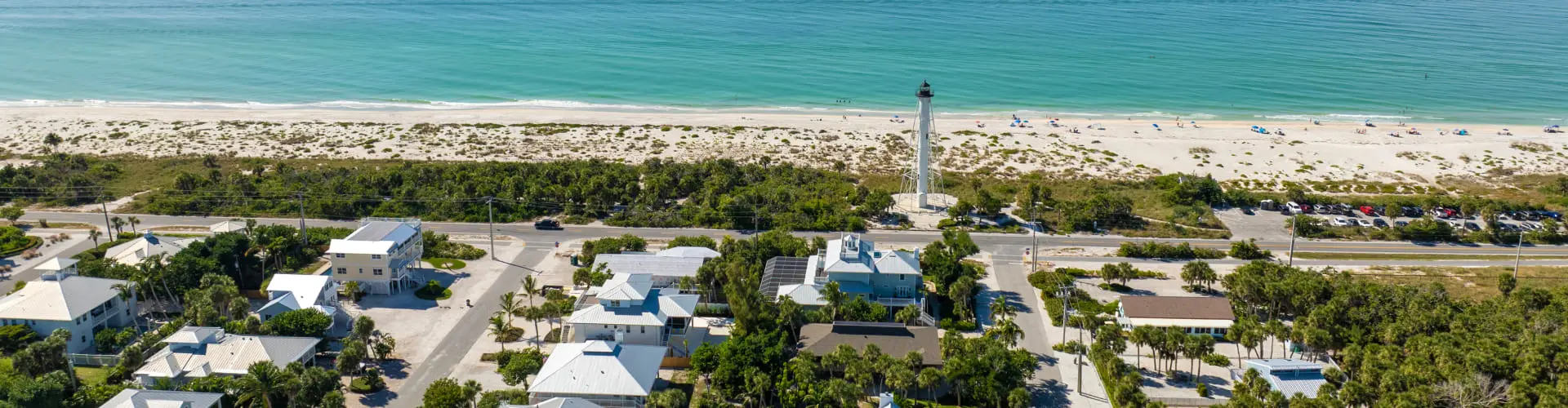
Drive south over the Wright Memorial Bridge and something feels different almost immediately. The horizon stays open.There’s no wall of oceanfront towers. No skyline of glass balconies stacked against the Atlantic. Instead, you see beach houses on pilings, sea oats bending in the wind, and a lot of sky. It’s not by accident. It’s a policy. And it has shaped the identity, economy, and tourism culture of the Outer Banks for more than four decades.
The Law That Changed the Skyline
In the early 1980s, as coastal development accelerated across the Southeast, leaders in Dare County made a pivotal decision - to limit how tall buildings could be constructed on the Outer Banks. Today, most oceanfront structures in Dare County are capped at 35 feet, generally translating to about three stories, depending on design and elevation requirements. There are a few notable exceptions, including the historic First Flight Airport area near the Wright Brothers National Memorial, where federal aviation regulations also restrict building heights due to protected airspace So the OBX chose low-rise development when other beach destinations chose vertical growth. That decision came at a time when places like Myrtle Beach and parts of the Florida coast were rapidly building 15- to 30-story oceanfront hotels and condos. While the Outer Banks went another way.
Geography Played a Role
Part of the reasoning was practical. The Outer Banks is a narrow chain of barrier islands, in some places only a few hundred yards wide. Barrier islands shift, storms reshape them, hurricanes cut new inlets and flatten dunes. Highway 12, the main roadway, has been repeatedly damaged and rebuilt after storms. Building tall, heavy structures on dynamic sand systems carries long-term risk. Low-rise construction spreads weight differently and allows structures to be elevated on pilings which is critical in a region prone to storm surge and overwash. So the height restriction wasn’t just aesthetic. It was strategic.
The Tourism Trade-Off
Choosing not to build high-rises limited density. And that changed everything. High-rise resorts allow thousands of visitors to stay in a small footprint. The OBX model, primarily single-family vacation homes and small hotels, spreads visitors across neighborhoods instead of stacking them vertically. So, there are fewer people per block, less shadow on the beach, more visual access to dunes and horizon and a quieter streetscape at night.
It also shaped the vacation experience. Instead of booking a room in a tower, most visitors rent full homes, often for a week at a time. According to the regional tourism data, weekly vacation rentals make up a significant portion of Dare County’s lodging inventory, especially during peak summer months. That structure encourages longer stays, multi-generational trips, and a more residential feel. And the OBX became known for beach houses.
Preserving the View (and the Brand)
Brand identity matters in tourism. By restricting height, the Outer Banks preserved something that can’t easily be rebuilt once lost - an uninterrupted skyline. If you stand on the beach in Nags Head or Corolla and look north or south, you will see rows of houses, but rarely anything that dominates the horizon. That openness has become part of the OBX’s appeal, especially for families and travelers seeking a quieter, less commercial beach atmosphere.
Economic Impact: Fewer Rooms, Higher Value
There’s an economic dimension, too. By limiting vertical density, Dare County effectively capped how many visitors could stay oceanfront at any given time. That constraint influences pricing. Prime summer rentals often book months in advance, and peak-season weekly rates reflect limited supply relative to demand. But that scarcity also protects infrastructure. Water systems, roads, and emergency services face less concentrated strain than they might in a high-rise corridor. And evacuation logistics, critical in hurricane-prone areas, are somewhat more manageable without thousands of guests concentrated in vertical complexes. The model favors stability over explosive growth.
What Might Have Been
In the 1970s and early 1980s, proposals circulated that could have dramatically altered the coastline. Without height limits, developers could have pursued oceanfront condo towers similar to those found elsewhere along the Atlantic.Once built, those structures would be nearly impossible to reverse. Instead, the height restriction locked in a certain scale of development, one that still defines the Outer Banks decades later. It’s one of those rare policy decisions where restraint shaped legacy.
In an era when many coastal destinations struggle with overdevelopment, the Outer Banks remains visually horizontal. Besides aesthetics, it affects how crowded the beaches feel, how sunsets look, how vacationers experience space. It also reinforces resilience. Barrier islands are not static landforms; they move. Low-rise construction aligns more closely with that reality than permanent vertical skylines would. The result isn’t flashy. Instead, it leaves room for the sky. And in the Outer Banks, that open sky may be the most valuable view of all.
FAQ Suggestions
1) Why are there no high-rises in the Outer Banks?
The Outer Banks limits building heights to preserve coastal views, reduce overcrowding, protect barrier islands, and maintain the region’s relaxed atmosphere.
2) How tall can buildings be in the Outer Banks?
Most buildings in Dare County are limited to around 35 feet, depending on zoning and elevation requirements.
3) Why does the Outer Banks feel less crowded?
Low-rise development spreads visitors across neighborhoods instead of concentrating them in large hotel towers, creating a quieter environment.
4) Does the Outer Banks have beachfront condos?
The OBX has some smaller condos and hotels, but large oceanfront high-rise buildings are largely restricted.
5) Why is the OBX skyline different from other beach destinations?
Unlike heavily commercial beach towns, the Outer Banks preserved open coastal views through strict development and building height regulations.