
Unforgettable Outer Banks: Beaches, History, & Charm
Discover the magic of the Outer Banks: breathtaking beauty, rich history, charming towns, & perfect family memories await!
Published
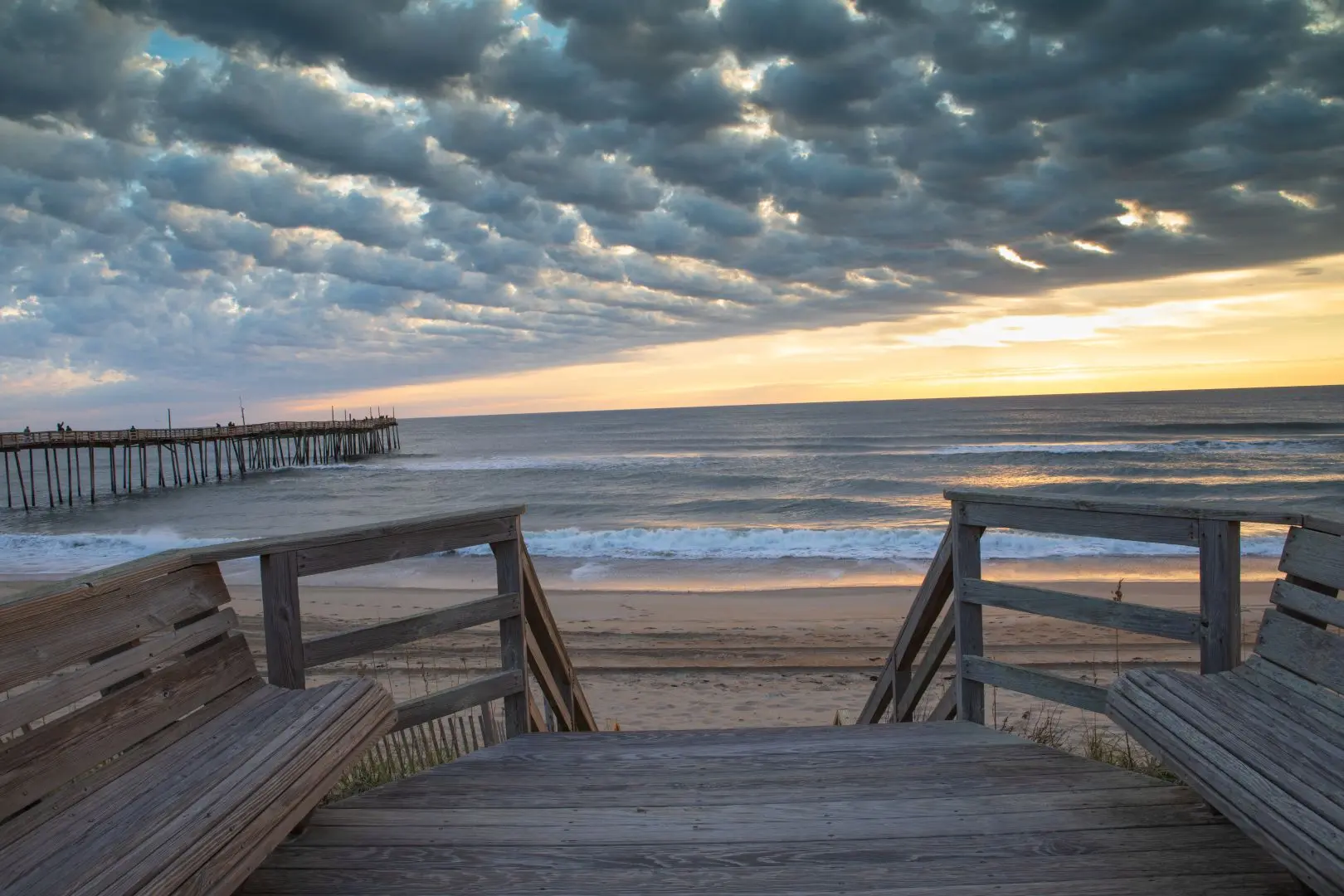
Welcome to The Outer Banks
The Outer Banks, there is nothing else quite like it anyplace in this world. Stretching for 130 miles from its northern border with Virginia to the the remote island of Ocracoke, it is as much a state of mind as it is a place of breathtaking beauty, environmental wonders and fascinating history.
This thin strip of barrier islands protects the mainland from the power of the Atlantic Ocean, and at times the ocean can be an angry neighbor. Usually, though, the waves are more sedate and the water refreshing. Combined with sunshine and warm sand, it is the perfect setting for a parent to take a son or daughter into the water for the first time. Or siblings to bodysurf side by side. Or lovers to stroll along a beach.
The magic of romance, the joy of family memories, all of it is part of the Outer Banks experience.
Getting Oriented
The Basics
For general purposes, the Outer Banks is divided into three areas. The northern Outer Banks is everything from Oregon Inlet north to the Virginia border. Hatteras Island is everything south of Oregon Inlet to Hatteras Village. And Ocracoke Island is a small island, with the village of Ocracoke at its southern end. Ocracoke is accessible by ferry only, with an airport suitable for small planes only.
There are three counties that make up the Outer Banks: Currituck, Dare and Hyde. For most visitors, knowing which county is which and where they are located doesn’t matter.
There are, however, some regulations that are specific to a county—beach use regulations in the Carova area of Currituck County is an example of that. For couples getting married on the Outer Banks, it’s also a good idea to know the county in which the ceremony is being performed.
The Counties
The Currituck Outer Banks begins at the northern border of the town of Duck and extends to the Virginia state line. The Currituck Outer Banks are sometimes called the Currituck Banks.
Most of Currituck County is on the mainland and the only way to get to the Currituck Banks is to drive through the towns of Southern Shores and Duck.
Dare County
Extending from the town of Duck on the northern end to Hatteras Village, a distance of 83 miles, Dare County is the main part of the Outer Banks.
Manteo, the county seat, is on Roanoke Island, which is just west of the Outer Banks. There is also an extensive part of the county on the mainland, but most of that is occupied by Alligator River National Wildlife Refuge.
Hyde County
Ocracoke Island at the southern end of the Outer Banks is part of Hyde County. It is a small island—9.6 square miles—with Ocracoke Village at the southern end of it.
Other than Ocracoke, all of Hyde County is on the mainland.
Towns, Villages and Communities (From north to south)
The 12 miles from the Virginia/North Carolina border to Corolla is Carova. There is a small community on the border that is Carova, but the whole area goes by the name.
Carova is the home of the Corolla Wild Mustangs. There are no paved roads and 4WD vehicles are needed to visit the area.
There is a small village of Corolla nestled at the base of the Currituck Beach Lighthouse. Other than that, for the 13 miles between the Currituck County line to where the paved road ends at Carova, there are no towns or villages in the traditional sense. Rather the area is made up of vacation homes, subdivisions and extensive shopping areas.
The Corolla beaches are considered some of the finest on the Outer Banks.
The northernmost of the Dare County towns, Duck features a well-developed multi-use trail plan, a soundside boardwalk and a compact business district focused on locally owned shops and restaurants. The town park is one of the best on the Outer Banks.
Perhaps the most residential of the Outer Banks towns, Southern Shores was carved out of a maritime forest in the 1950s. The Frank Stick designed flat top vacation homes are of particular note. Almost all of the seasonal rentals are located within two blocks of the Atlantic Ocean.
One of the core towns of the Outer Banks and one of the first places to be settled, Kitty Hawk is, by area, the largest of the towns in Dare County. Inside its borders is Kitty Hawk Woods, a 1900 acre protected maritime forest. Many of the homes and businesses along the Beach Road retain the original architecture and feel of the town.
Sandwiched between Kitty Hawk and Nags Head, Kill Devil Hills is the most populous town on the Outer Banks. This is where the Wright Brothers first heavier than air flights took place and the Wright Brothers Monument marks the location.
The Beach Road retains much of the original feel of the town.
The first town on the Outer Banks to host tourists, Nags Head boasts a number of homes on the National Register of Historic Places. There are three fishing piers in town. At 1000’,Jennette’s Pier is the longest on the Outer Banks.
The northern end of Cape Hatteras National Seashore is in South Nags Head.
A little to the west of the ocean, Manteo is not actually an Outer Banks town. Located on Roanoke Island, it is the county seat of Dare County and very close to the beach. The town has a charming, well-developed downtown area.
The Tri-Villages, Rodanthe, Waves and Salvo
The northern most of the Hatteras Island towns, Rodanthe, Waves and Salvo are very small villages that are generally grouped together as the Tri-Villages. Just north of Rodanthe, the northernmost village, are the S Curves with some of the best surf conditions on the East Coast. The towns are also where a number of kitesurfing businesses are located.
The largest town on Hatteras Island, Avon has the only shopping plaza and chain supermarket south of Oregon Inlet. There is a small commercial fishing dock on the soundside of the town.
Buxton is the location of the Cape Hatteras Lighthouse, perhaps the most iconic and recognizable lighthouse on the East Coast. There is no clear marker where Buxton ends and Frisco begins, although Frisco is to the south of Buxton. The Frisco Native American Museumstrong is an interesting stop.
Hosting a substantial commercial and sport fishing fleet, Hatteras Village is at the southern tip of Hatteras Island. The Graveyard of the Atlantic Museum is located here. The ferry docks on the south end of town is where the Ocracoke ferry is boarded.
A beautiful little village existing in splendid isolation, Ocracoke is accessible by ferry only. It is a compact little town, seeped in history. The best way to get around is by foot, on a bike or rent a golf cart.
Blackbeard the Piratemet his end at Ocracoke in 1718.